
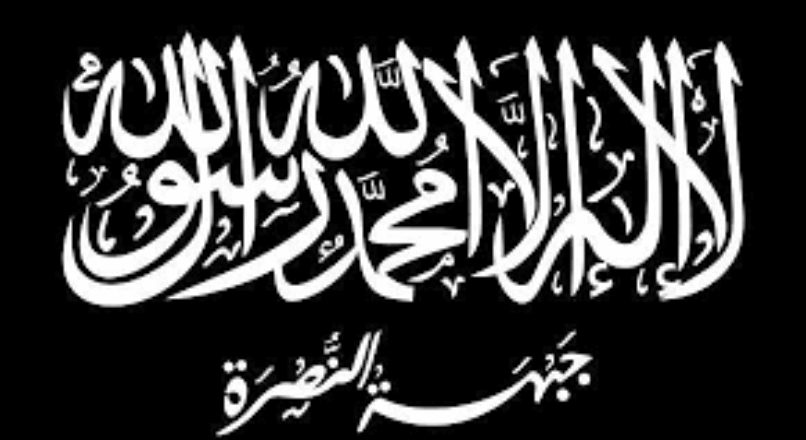
The Hadith of the Black Banners
Ibn Abi Shayba and Naim b. Hammad reported it in their work called Fitan, while Ibn Majah and Abu Naim reported it from Ibn Mas'ud. He said:
We While he was with the Prophet (pbuh), a group of young men from Banu Hashim came. When the Prophet (pbuh) saw them, his eyes filled with tears and his complexion changed.
I said, “What happened is that we see something on your face that you don’t like.”
He declared: "We are such an Ahl al-Bayt that Allah has chosen for us not this world but the Hereafter. Indeed, after me, my Ahl al-Bayt will face tribulations and hardships, and will be subjected to destruction. Until a people with black banners arrive from the East. They demand the Truth, but it is not given to them. They fight, they are victorious, and their demands are granted. But they will not accept it unless it is given to one of my Ahl al-Bayt. He (the Mahdi) will take control of the earth and fill it with justice, which was full of oppression and cruelty before him. Whoever of you reaches him, let him come, even if he has to crawl on snow, and join him. For he is the Mahdi."
(Suyuti, Fiten, 2, 6)
From Abdullah (bin Mas'ud) (Radiyalldhu anhu):
Once, while we were with the Messenger of Allah (peace and blessings be upon him), a group of the sons of Hashim approached us. When the Prophet (peace and blessings be upon him) saw them, his eyes filled with tears and his complexion changed. Abdullah said, "Thereupon I said,
I said, (O Messenger of Allah!) We have been seeing a change in your face for some time that we do not desire (that is, it saddens and worries us).
He said, "We are a household whose members Allah has chosen for us over the Hereafter. My Ahl al-Bayt will surely suffer tribulation, expulsion, and exile after me. Finally, a people carrying black banners will come from the east and demand good (dominion). But their request will not be granted. Thereupon, they will fight, and Allah will help them. After this, what they demand will be given to them, but they will refuse and entrust the dominion to a man from my Ahl al-Bayt. This Emir will fill the earth with justice, just as people had previously filled it with oppression. So, whoever of you lives to that day, let him join them, even if it means crawling through snow."
(Ibn Majah, Fitan, Chapter 34, 4082)
Notes:
It is stated in Zawaid: "This chain of narration is weak because the narrator Yazid ibn Abi Ziyad is weak. However, Yazid ibn Abi Ziyad did not narrate it from Ibrahim alone. Because al-Hakim also narrated it in al-Mustadrak, through Omar ibn Qays, from al-Hakam, and this one from Ibrahim."
حدثنا قتيبة حدثنا رشدين بن سعد عن يونس عن بن شهاب عن الزهري عن قبيصة بن ذؤيب عن أبي هريرة قال قال رسول الله صلى الله عليه وسلم تخرج من خراسان رايات سود لا يردها شيء حتى تنصب بإيلياء
According to the narration from Abu Hurayra (ra), he said: The Messenger of Allah (pbuh) said:
"Black banners will emerge from Khorasan and no power will be able to defeat them. In the end, those banners will be erected in Iliya (Jerusalem)."
(Tirmidhi, Fitan, Chapter 79, Hadith no: 2269) (Narrated by Tirmidhi.)
Tirmidhi: This hadith is strange.
“Certainly, some people will emerge from the East and prepare the ground for the dominance of the Mahdi of the End Times.”
(Fatawa-i Hadisiyya, Ibn Hajar-i Heytemi-40)
The black bannermen set out for the Abbasids. Then, another expedition departed from Khorasan; their skullcaps were black and their clothes were white. Their commander was a man from Tamim called Shu'ayb ibn Salih, who defeated Sufyani's men. He descended to Bayt al-Maqdis, prepared the ground for the Mahdi's rule, and was aided by three hundred men from Damascus. Seventy-two months elapsed between his departure and the delivery of the command (duty) to the Mahdi.
(Fatawa-i Hadisiyya, Ibn Hajar-i Heytemi, 42)
رجل ربعة,أسمر, من بنى تميم, مجذوم, كوسج, يقال له شعيب بن صالح فى اربعة الاف ثيابهم بيض و راياتهم سود يكون على مقدمة المهدى ولا يلقاه احد الا قتله
A man of medium height, dark skinned, with a light beard and a bald head (kawsej) from the sons of Tamim, known as Shu'ayb ibn Salih. He is the commander of 4,000 men, clad in white robes and carrying a black banner. He is the Mahdi's vanguard and kills anyone he confronts or opposes in battle.
(Fatawa-i Hadisiyya, Ibn Hajar-i Heytemi, 41)
"It is a shame for Talikan (Afghanistan). Undoubtedly, Allah Almighty has treasures there that are not gold or silver. There are people there who truly know Allah. They are the helpers of the Mahdi of the end times."
(Kitab-ul Burhan fi Signs of the Mahdi of the End Times, p. 59)
Ibn Qayyim (rahimahullah) said: They brought the following hadith narrated by Imam Ahmed in the Musnad as evidence:
He narrated to us from Veki, from Serik, from Ali b. Zeyd, from Abu Qilabah, from Thawban, and he said:
The Messenger of Allah (pbuh) says:
اذا رايتم الرايات السود قد اقبلت من خراسان فاتوها ولو حبوا على الثلج, فان فيها خليفة الله المهدى
"When you see the black bannermen coming from Khorasan, go to them, even if you have to crawl on snow. For among them is the Mahdi, the caliph of Allah."
(Fetawa-i Hadisiyya, Ibn-i Hajar-i Heytemi-37; Hakim, 8572; Ahmed b. Hanbel, Musnad, 22387 – 5 / 277)
As for Ali ibn Zayd, the narrator of this hadith, Muslim has attributed his narrations to the majority of the hadiths. However, Ali ibn Zayd was a weak narrator, and there were some unfounded hadiths that he narrated alone. Therefore, since he was alone in his narrations, no evidence can be presented based on his narrations.
The following: حدّثنا عَبْدُ الرَّزَّاقِ عَنْ سُفْيَانَ الثَّوْرِيِّ، عَنْ خَالِدٍ God bless you, God bless you الرَّحَبِيِّ، عَنْ ثَوْبَانَ؛ قَالَ: قَالَ رَسُولُ اللهِ صلى الله عليه وسلم
يَقْتَيِلُ عِنْدَ كَنْزِكُمْ ثَلاَثَةٌ كُلُّهُمُ ابْنُ خَلِيفَةٍ. God bless you, God bless you. ثُمَّ نَطْلُعُ الْمَشْرِقِ فَيَقْتُلُوَنَكُمْ قَتْلاً لَمْ يُقْتَلْهُ قَوْمٌ
God bless you. فَقَالَ: عَلَى الثَّلْجِ خَلِيفَةُ اللهِ، الْمَهْدِيُّ)
في الزوائد: هذا إسناده صحيح. رجاله ثقات. ورواه الحاكم في المستدرك، وقال. صحيح على شرط الشيخين
He said in Zawaid: Its chain of narration is authentic and its narrators are reliable. Al-Hakim said in Mustadrak: It is authentic according to the condition of the Shaykh.
It is included in al-Mustedrak through al-Husayn ibn Hafs. Hakim states that this hadith is authentic according to the conditions of Bukhari and Muslim. Dhahebi also expresses the same opinion in al-Talhis.
(Ibn Majah, Sunan Fitan 34 no: 4084; al-Bayhaqi Delailu'n-nubuvve VI. 515; al-Naysaburi Hakim, al-Mustedrak, IV, 510 no: 140/8432)
Al-Albani said about the narration in Ibn Majah that it is “authentic” except for the statement “He is the Mahdi, the caliph of Allah.” (Daifa (1/119-121 Hadith no: 85)
There are two narrations on this subject. One is in Ahmed ibn Hanbal's Musnad, which states, "The chain of narration has a weak narrator, so the hadith is problematic..."
But the other narration is authentic, except for the statement in Ibn Majah, “Allah’s caliph is Mahdi.”

 Türkçe
  English
Leave a reply