
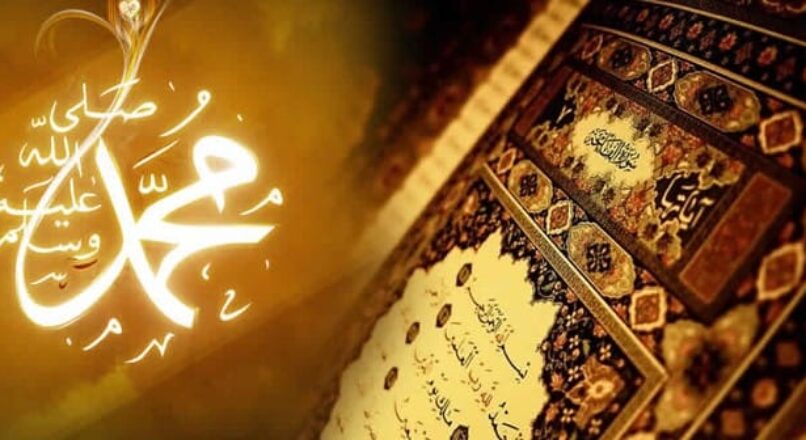
WHAT IS SIYER AND ITS IMPORTANCE
The word "Siyer", which means the life story of Hz. Muhammad Sallallahu Alayhi wa Sallam, is the plural of the Arabic word "SIRA". It is a word used to describe the life (translation of the state) of Hz. Prophet (pbuh). (Şamil İslam Ans. 1/218) When the word tavarih is mentioned, past periods, past times, the life stories of the people who lived in those past times come to mind. But when the word "Siyer" is mentioned, Prophets, Hz. Muhammad (pbuh) come to mind. Because the books written about the Prophets (pbuh) are given names such as "Siyer- Siret-i Nebi- Siyer-i Nebi". When these names are heard in particular, the life of Hz. Prophet (pbuh) should be remembered. In terms of content; The books that tell about the life of the Prophet (pbuh) from his birth to his death, including his genealogy, birth, childhood, youth, prophethood, events that took place in Mecca and Medina, and the wars that took place, are called "Siyer-i Nebi", "es- Siyretü'n-Nabawiyye" or simply "SİYER".
The biography has a more general meaning, the megaz has a more specific meaning…… The biography has entered Hadith in one sense, and Islamic history in another. Indeed, the biography requires knowledge of the science of Hadith, which tells about the words and actions of the Prophet Muhammad (pbuh); and it also forms a part of Islamic history, as it provides information about every stage of his life… Among the sources of the biography, the Quran, which has not been subject to any damage or distortion since its revelation, takes the first place. When there are verses and signs in the Quran about any event, there is no need to look for another source. The second place in the sources belongs to the Hadith Sharifs. Especially, information about the life of the Prophet Muhammad (pbuh) in Medina can be found in all its details in the hadiths. These two sources, as in every branch of Islamic sciences, are indispensable sources for the biography.
Among the sources of the biography, the narrations from the Companions have a very important place. The narrations of this distinguished group, who verbally transmitted what they saw and heard from the Prophet (pbuh) to the next generation, were presented as written documents starting from the Umayyad period and these constituted the source for the first books of the biography and the Maghazi. After continuing as an oral narration for a while, the biography of the Prophet began to be compiled. The first person to compile the biography was Ibn Shihab az-Zuhri (Rh.a. d. 122/739). There are four works in the field of the biography that have achieved great fame in Islamic history. They are called the “Biography of the Prophet” (The Four Most Famous Biography). These are: 1-“es-Sirah al-Nabawiya” by Ibn Hisham;
2-“Uyunul-Eser” of Ibn Seyyiddin-Nas;
3-“Sabiul-Hadyi wa'r-Rashad” of Muhammad b.Yusuf of Damascus and
4-It is the “Insanul-Uyun” of Ali b. Burhaneddin el-Halebi.” (Ş.İslam Ans. C/7, p:218-219)
According to another narration, the most famous "SIYER" books are three and they are:
"There are many biography books written on the high lives of the prophets. But the most comprehensive and perfect of them are those about the high life states of our prophet. The first biography book about our prophet was written by "Urwa" from the Tabi'een (those who saw his companions) and "Zuhri" from his students. According to another narration, the first person to write the holy biography of our prophet was Muhammad ibn Ishaq, who died in Baghdad in the year (150) of the Hijra.
The oldest and most reliable biography books available today are the following three works:
1-The Book of Biography of Vaqidi, who died in Baghdad in (207).
2-The Book of Biography of Ibn Hisham of Basra, who died in (313).
3- It is the book of the Biography written by Muhammad Tabari, who died in Baghdad in the year (315).
Just as Islamic scholars have written many books about our Prophet, European orientalist historians have also written many books on this subject.” (Ö. Nasuhi Bilmen İslam Catechism, p: 496-497)
In another work; “The word “Siyer” is the plural form of siret. Siret means going, the path that a person follows spiritually. In terms of knowledge, “Siyer-i Nebi” is a history. However, it only teaches the life of the Prophet. Historical knowledge is general. Biography of the Prophet is specific; it is the personal history of our Prophet for 63 years in terms of lunar year. Biography of the Prophet is a branch of both the science of Hadith and Islamic history. Biography is a part of the science of Hadith in terms of the words spoken and deeds of our Prophet, and it is the most accurate section of Islamic history in terms of his political and military life. Biography is related to other professional knowledge, such as Tafsir, Hadith, Fiqh and worship. For this reason, Biography of the Prophet is the soul of professional knowledge. Unless the life of our Prophet is known correctly, it is not possible to understand what Tafsir, Hadith, Fiqh or morality is. Biography touches upon all these professional knowledge in due time.
The knowledge of the Prophet's biography, while explaining the life of our Prophet from social, political, military, religious and moral aspects, produces some rules. However, it never exceeds its own limits.... For this reason, all professional knowledge finds its source in the life of the Prophet. (The Life of Our Prophet - Biography of the Prophet - Imam-Hatip High Schools, 1st Grade, p: 1-2. M. Zekai KONRAPA. STATE Kit. İst. 1980) Since it is related to our subject, I would like to share with you some sections of the introductory article of a book written by Nizameddin DEMİR in the monthly “Misak” magazine: “In order to get sound and reliable information about past periods, it is necessary to take a look at the “Kütub-ü Tevarih”. And sound tavarih, at that! The tavarih written about the Prophets (pbuh) is called “Biography”. Especially when “Biography of the Prophet” is mentioned, the life of Hz. Muhammad (pbuh) comes to mind… Biography is the plural of sirah.
The book we will be introducing in this issue is “Fiqh al-Sayrah” by Prof. Dr. Ramazan El-Buti Hoca Efendi. The life of our Prophet (pbuh) is discussed in the most beautiful way that today’s Muslims can understand. The book is very perfect because it was written by an experienced pen. Moreover, the fact that the author has the Ahl al-Sunnah creed and does not approach some issues through the eyes of the “Orientalists” gives the book a completely different feature. There is another feature of choosing this book for introduction, as can be understood from the connotation of the book’s name, it is the “FIQH” that emerged with the biography! In other words, the jurisprudence of the biography! Biography books definitely have their sources from the Quran and the Sunnah. “Siret-i Nebi” or Fiqh al-Sira” means; the book that tells how the religion (Islam) brought by the Pride of the Universe Hz. Muhammad (pbuh) will prevail in life. It means the book that tells how the transition from the individual to the community, from the community to the state is. Therefore, those who study the Sirah who want to carry the “Age of Bliss” to the present day need to know the “Fiqh al-Sira” very well. The reflection of the “Age of Bliss” as “Fiqh al-Sira” is the same as the reflection of an object in a mirror. Believers who read the Sirah need to think very well about why they read the Sirah. Although today’s Muslims say that they understand the “Sirah of the Prophet” well, when we see the methods of struggle they carry out, it is understood that they cannot grasp the “Sirah of the Prophet”. Sirah books; “Tale-Story-Novel-Legend” they are not books.
Especially the “Battal-ı Gazi Legends- Shia sourced war books” read under the name of Siyret are not at all. The Muslims of the twentieth century have suffered in the misery of not being able to reflect the Siyret-i Nebi in their actions, lives, and methods of struggle, and of not being able to make it dominant. (They still continue to suffer, be oppressed, and belittled.) Our hope is that the Muslims of the twenty-first century do not make the same mistakes, do not wear out the same erroneous paths!!! Because; The Almighty Allah (cc), who sent Islam, has also sent the method of how to make the religion He sent dominant in life. Isn’t this irregularity the real source of the barrenness in the works of the Muslims of the world? Isn’t the “SPRING” that will deceive the thirsty hearts the spring of “Syret-i Nebi”? Is there any other way than melting in the “Siret-i Nebi” and becoming one with the “Siret-i Nebi”? Of course not!……….
The author of the book, Ramazan el-Buti Hocaefendi, focused on the sources of the “Syrah-i Nebi” at the beginning of the book. Then, he related some of the events that developed and changed from the birth of our Prophet (pbuh) to his becoming a Prophet. Then, he gave a summary of why our Prophet (pbuh) married so many people, why the enemies of Islam meddled in this matter, and the thoughts of some orientalists on this matter. He conveyed the truths of revelation and the views of some orientalists on the issue of revelation. (p:88)
He then focused on the stages of invitation to Islam and drew attention to how the invitation was revealed after being secret… He drew attention to the fact that tortures, boycotts and embargoes started accordingly and finally the first “HIJRA” took place and that Mecca-i Mukarrama was not the “House of Islam” in those days… He drew attention to the miracle of Isra-Miraj… He conveyed the narrations (with references to Bukhari-Muslim) that prayer was first made obligatory “fifty times” during the Miraj and then limited to five times. Many theologian professors who adopted the Orientalists’ approach to revelation and miracles continue to head towards the deepest depths of Hell by denying both the Miraj and the Miraj hadiths.
Recently, a theologian Professor, who is pursuing the ambition of gaining a media title, was asked a sarcastic question on a TV channel, saying, “Prayer was first made obligatory fifty times a day during the ascension, and then reduced to five times a day,” and this media Professor (Yaşar Nuri ÖZTÜRK) responded by saying, “Only polytheists can say these words”!!! However, the person who informed the Ummah of this news (the news that prayer was first made obligatory fifty times a day) was the Master of the Universe, Hz. Muhammad (pbuh). Are these kinds of heretic guys, the representatives of the world's orientalists in Turkey, not aware that they are implicitly calling the Prophet (pbuh) a "polytheist"?…… Attention has been drawn to the fact that at the head of this wicked caravan are the heretic and Mason Afghani and his disciples M. Abduh, R. Rıza, F. Vecdi, H. Heykel, the Asian representative M. Bugiyef (Kazanlı), etc.……
All of these non-madhhabi deviants are members of the Pharaohs of Dalal. It is seen that many heedless people who have buried their heads in the sand have not given up their efforts to introduce the aforementioned heretics as “Mujtahids” and “Mujaddids”… Jihad was made obligatory in Medina; By drawing attention to the “Darun-Nedve” in Mecca, which was considered the administrative center of the Arabian Peninsula at that time, and the decision taken there, today’s “Darun-Nedve”s were emphasized… (Some heedless Muslims today also sacrifice their wealth and lives to enter Darun-Nedve. And they call this disaster jihad. In this state, they are trying and trying to legitimize an assembly that our Prophet (pbuh) definitely rejected. Despite many offers, our Prophet (pbuh), who was sent as a mercy to the worlds, definitely did not enter Darun-Nedve. Despite all these offers of the polytheists, he did not set foot there: “Even if you put the moon in my left hand and the sun in my right hand, I will not give up this cause,” he said and rejected these offers of the polytheists.)
Later, it was emphasized that the state came to the agenda with the Hijra, that our Prophet (pbuh) established the Islamic State of Medina (Although the foolish H. Ismail denied such truths, these are the main subjects of the biography. It is not possible to plaster the sun with clay.) and that he was the head of this state… He conveyed that an agreement was made with non-Muslims under the presidency of the Messenger of Allah (pbuh), that this agreement was called the “Medina Document”, that today’s Muslims have not yet fully comprehended this agreement, and that “Fiqh al-Sira” was overshadowed by using this agreement as an excuse. Because the 11th article of this agreement (document) mentioned “Sainthood”! The author then moved on to describe the wars and drew attention to the fact that “preoccupation with headscarves” by believing women was a cause for war……
Then, he conveyed the fiqh views on the “IFK” incident and whether a woman’s voice is private or not. (According to the correct opinion, a woman’s voice is not private or private. Ibn Abidin C/2, page:11-112. C/15, page:395) Later, it was clarified that the gatherings held by some Sufis under the names of “Raks” and “Sema” were “Bid’ah” that have no place in Islam, the issue of Masjid al-Dırar was given as a text and its universality was emphasized… The legitimacy of reading and blowing, the existence of the reality of magic and the legitimacy of treating such patients with “Amulets” were drawn. Attention was drawn to the fact that the selection of caliphs was according to their order of superiority, the duration of the caliphate, their deeds, the “Siffin Incident”, the relations between the Kharijites and the Prophet (pbuh). Ali (ra) narrated the "ARBITRATION INCIDENT" very briefly and clearly and advised not to speak ill of the Companions.
In conclusion, if we were to summarize it in one sentence; the book of “Fiqh al-Sayrah” which we can call Invitation to Islam-Community-Hijra-State; is a very good book for Muslims who want to know Hz. Muhammad (pbuh), for those who want to learn and live the religion he brought…..” (Misak Magazine, issue: 89, pages:44-45-46.April-1998) As can be seen, Misak magazine is a very good magazine published by Muslims who adhere to the Ahl al-Sunnah Aqaid. If you have not subscribed, hurry up and try to subscribe now. Since it is published in a closed circuit method, it is not sold in bookstores. Be sure to subscribe. Own a valuable magazine.
NOTES: “Misak” Magazine Correspondence Address: Cihan Sk.No33/5 06430.Sıhhiye. Ankara. Türkiye Nizameddin DEMİR

 Türkçe
  English
Leave a reply